
Cubes and Dice Lesson 3
Q1–10 of 36Three different positions of a dice are shown below. How many dots lie opposite 2 dots?
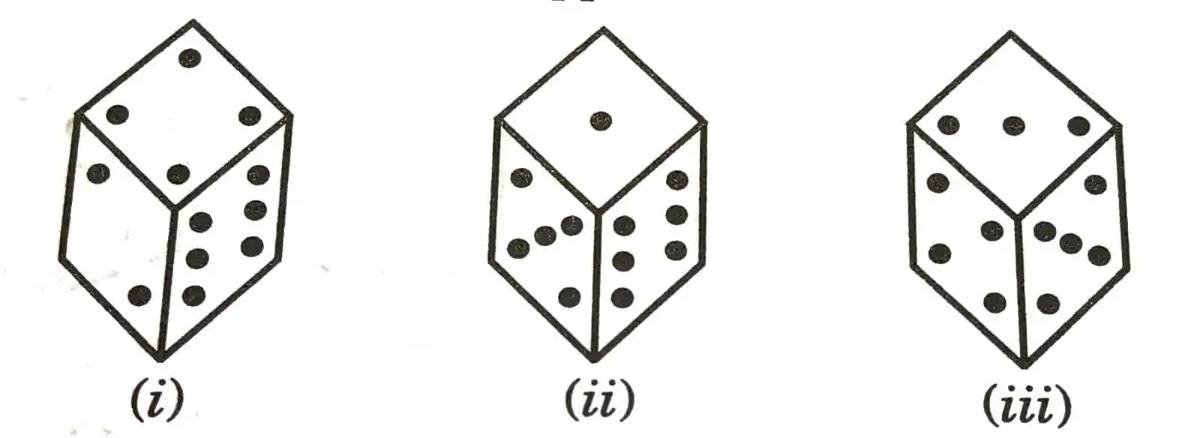
From figures (ii) and (iii), we conclude that 1, 6, 3 and 4 dots lie adjacent to 5 dots. Therefore, 2 dots must lie opposite to 5 dots. Conversely, 5 dots must lie opposite to 2 dots.
Below are depicted the three different positions of a dice. Find the number of dots on the face opposite to the face with one dot.
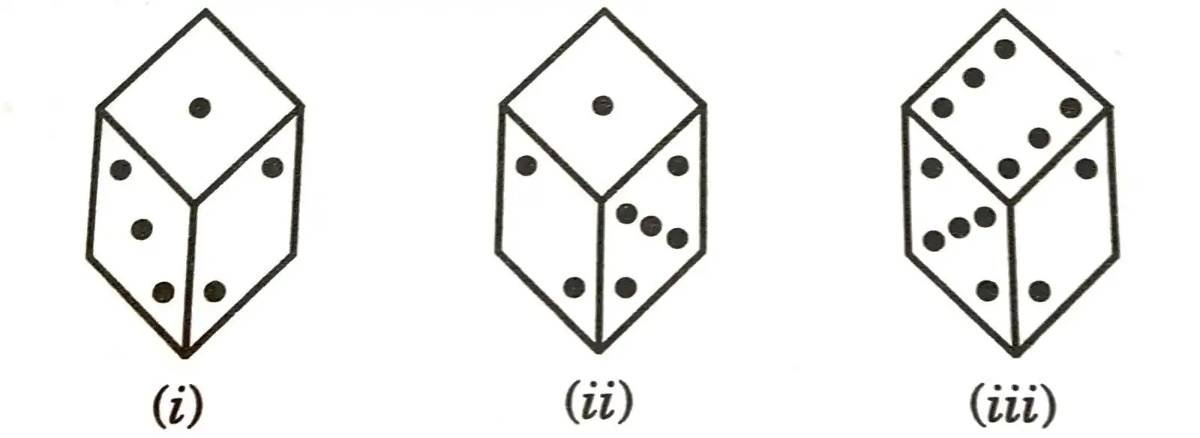
From figures (i), (ii) and (iii), we conclude that 1, 3, 5 and 6 dots appear adjacent to the face with 2 dots. Therefore, 4 dots will appear opposite to 2 dots. Now, from figures (i) and (ii), we conclude that 2, 3 and 5 dots appear adjacent to 1 dot. Therefore, either 4 or 6 dots will appear opposite to 1 dot. But since, 4 dots appear opposite to 2 dots it follows that 6 dots will appear opposite to 1 dots.
Two different position of the same dice are shown, the six faces of which are numbered from 1 to 6. Select the number that will be on the face opposite to the one having '4'.
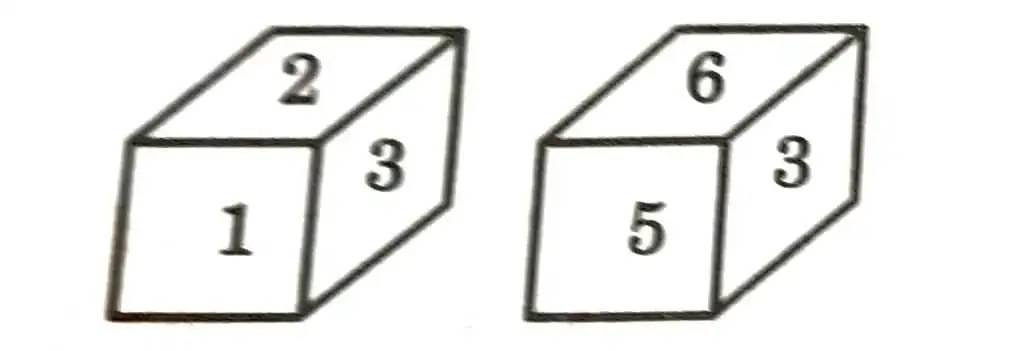
'3' is opposite to '4'.
Identify the number at the bottom when the top is 5 in a dice.
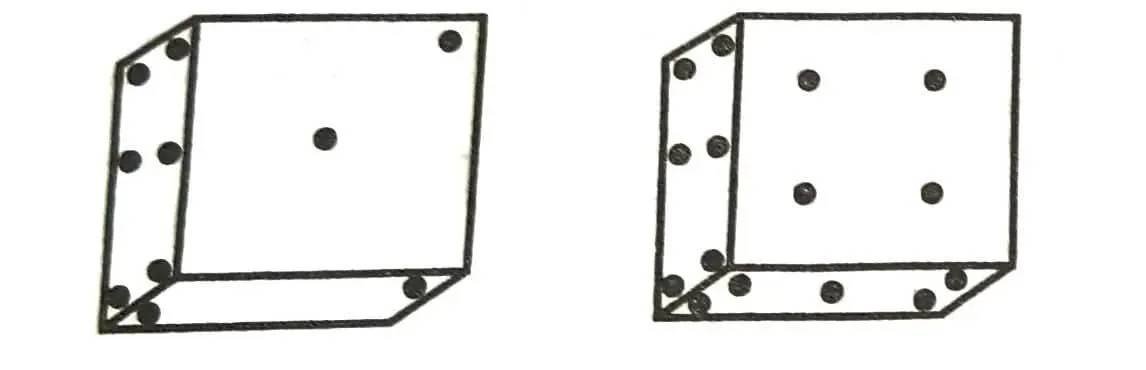
Based on the configurations of the dice, it is evident that the number 6 is surrounded by the numbers 2, 3, 4, and 5 on adjacent faces. Consequently, number 1 is opposite to number 6. By rotating the dice around the face labeled 6, a second orientation of the dice is achieved. From this, it is determined that number 4 is opposite to number 3, and number 2 is opposite to number 5.
Two positions of a dice are shown below. When three is at the top what number will at the bottom?
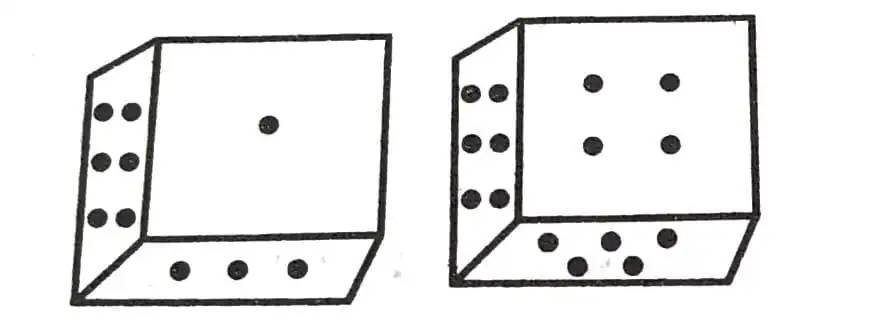
Based on the two displayed positions of the dice, it's clear that number 6 is surrounded by numbers 1, 3, 4, and 5 as its adjacent numbers. Thus, number 2 is on the face opposite to number 6. By rotating the dice from its first position twice around the face with number 6, a second position is achieved. From this orientation, number 1 is determined to be opposite to number 4. Consequently, number 3 must be opposite to number 5.
Two different positions of the same diece are shown, the six faces of which are numbered from 1 to 6. Select the number that will be on the face opposite to the face having '6'.
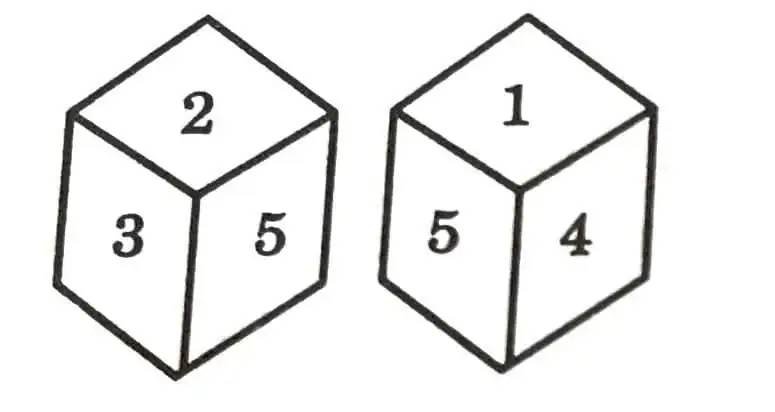
From given figure, '6' is opposite to '5'.
Two positions of a dice are given below. What can come on the adjacent faces of the face containing 'F' on it?

8 and L can come on the adjacent of F
Two positions of a dice are given below. What will come on the face opposite to the face containing 'J' on it?

A ↔ A
H ↔ J
G ↔ I
A dice is rolled twice and the two positions are shown in the figures below. What is the number of dots at the bottom face when the dice is in position (i)?
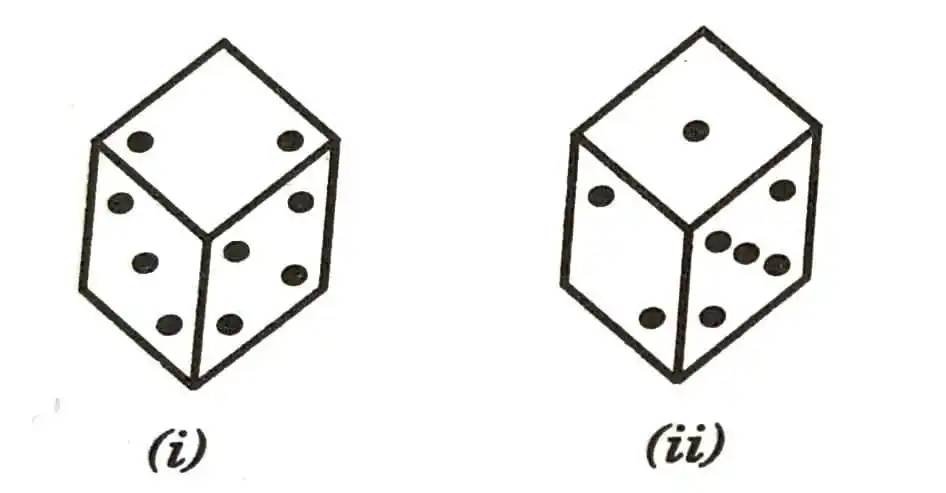
From figures (i) and (ii) we conclude that 3, 4, 1 and 5 dots appear adjacent to 2 dots. Therefore, 6 dots must appear opposite to 2 dots. Since, there are 2 dots on the top face when the dice is in position (i), therefore the number of dots at the bottom face must be 6.
A dice is thrown four times and its four different positions are shown below. Find the number on the face opposite the face showing 2.
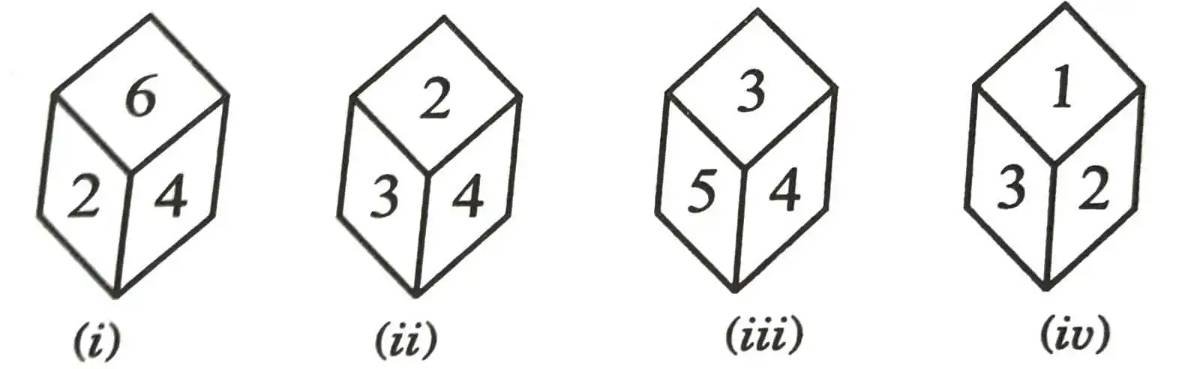
From figures (i), (ii) and (iv) we conclude that 6, 4, 3 and 1 lie adjacent to 2. Hence, 5 must lie opposite 2.