
CAT 2023 DILR Slot 3
Q1–10 of 20There are only three female students – Amala, Koli and Rini – and only three male students – Biman, Mathew and Shyamal – in a course. The course has two evaluation components, a project and a test. The aggregate score in the course is a weighted average of the two components, with the weights being positive and adding to 1.
The projects are done in groups of two, with each group consisting of a female and a male student. Both the group members obtain the same score in the project.
The following additional facts are known about the scores in the project and the test.
1. The minimum, maximum and the average of both project and test scores were identical – 40, 80 and 60, respectively.
2. The test scores of the students were all multiples of 10; four of them were distinct and the remaining two were equal to the average test scores.
3. Amala's score in the project was double that of Koli in the same, but Koli scored 20 more than Amala in the test. Yet Amala had the highest aggregate score.
4. Shyamal scored the second highest in the test. He scored two more than Koli, but two less than Amala in the aggregate.
5. Biman scored the second lowest in the test and the lowest in the aggregate.
6. Mathew scored more than Rini in the project, but less than her in the test.
What was Rini's score in the project?
There are only three female students – Amala, Koli and Rini – and only three male students – Biman, Mathew and Shyamal – in a course. The course has two evaluation components, a project and a test. The aggregate score in the course is a weighted average of the two components, with the weights being positive and adding to 1.
The projects are done in groups of two, with each group consisting of a female and a male student. Both the group members obtain the same score in the project.The following additional facts are known about the scores in the project and the test.
1. The minimum, maximum and the average of both project and test scores were identical – 40, 80 and 60, respectively.
2. The test scores of the students were all multiples of 10; four of them were distinct and the remaining two were equal to the average test scores.
3. Amala's score in the project was double that of Koli in the same, but Koli scored 20 more than Amala in the test. Yet Amala had the highest aggregate score.
4. Shyamal scored the second highest in the test. He scored two more than Koli, but two less than Amala in the aggregate.
5. Biman scored the second lowest in the test and the lowest in the aggregate.
6. Mathew scored more than Rini in the project, but less than her in the test.
What was the weight of the test component?
There are only three female students – Amala, Koli and Rini – and only three male students – Biman, Mathew and Shyamal – in a course. The course has two evaluation components, a project and a test. The aggregate score in the course is a weighted average of the two components, with the weights being positive and adding to 1.
The projects are done in groups of two, with each group consisting of a female and a male student. Both the group members obtain the same score in the project.The following additional facts are known about the scores in the project and the test.
1. The minimum, maximum and the average of both project and test scores were identical – 40, 80 and 60, respectively.
2. The test scores of the students were all multiples of 10; four of them were distinct and the remaining two were equal to the average test scores.
3. Amala's score in the project was double that of Koli in the same, but Koli scored 20 more than Amala in the test. Yet Amala had the highest aggregate score.
4. Shyamal scored the second highest in the test. He scored two more than Koli, but two less than Amala in the aggregate.
5. Biman scored the second lowest in the test and the lowest in the aggregate.
6. Mathew scored more than Rini in the project, but less than her in the test.
What was the maximum aggregate score obtained by the students?
There are only three female students – Amala, Koli and Rini – and only three male students – Biman, Mathew and Shyamal – in a course. The course has two evaluation components, a project and a test. The aggregate score in the course is a weighted average of the two components, with the weights being positive and adding to 1.
The projects are done in groups of two, with each group consisting of a female and a male student. Both the group members obtain the same score in the project.The following additional facts are known about the scores in the project and the test.
1. The minimum, maximum and the average of both project and test scores were identical – 40, 80 and 60, respectively.
2. The test scores of the students were all multiples of 10; four of them were distinct and the remaining two were equal to the average test scores.
3. Amala's score in the project was double that of Koli in the same, but Koli scored 20 more than Amala in the test. Yet Amala had the highest aggregate score.
4. Shyamal scored the second highest in the test. He scored two more than Koli, but two less than Amala in the aggregate.
5. Biman scored the second lowest in the test and the lowest in the aggregate.
6. Mathew scored more than Rini in the project, but less than her in the test.
What was Mathew's score in the test?
There are only three female students – Amala, Koli and Rini – and only three male students – Biman, Mathew and Shyamal – in a course. The course has two evaluation components, a project and a test. The aggregate score in the course is a weighted average of the two components, with the weights being positive and adding to 1.
The projects are done in groups of two, with each group consisting of a female and a male student. Both the group members obtain the same score in the project.The following additional facts are known about the scores in the project and the test.
1. The minimum, maximum and the average of both project and test scores were identical – 40, 80 and 60, respectively.
2. The test scores of the students were all multiples of 10; four of them were distinct and the remaining two were equal to the average test scores.
3. Amala's score in the project was double that of Koli in the same, but Koli scored 20 more than Amala in the test. Yet Amala had the highest aggregate score.
4. Shyamal scored the second highest in the test. He scored two more than Koli, but two less than Amala in the aggregate.
5. Biman scored the second lowest in the test and the lowest in the aggregate.
6. Mathew scored more than Rini in the project, but less than her in the test.
Which of the following pairs of students were part of the same project team?
i) Amala and Biman ii) Koli and Mathew
In a coaching class, some students register online, and some others register offline. No student registers both online and offline; hence the total registration number is the sum of online and offline registrations. The following facts and table pertain to these registration numbers for the five months – January to May of 2023. The table shows the minimum, maximum, median registration numbers of these five months, separately for online, offline and total number of registrations. The following additional facts are known.
1. In every month, both online and offline registration numbers were multiples of 10.2. In January, the number of offline registrations was twice that of online registrations.
3. In April, the number of online registrations was twice that of offline registrations.
4. The number of online registrations in March was the same as the number of offline registrations in February.
5. The number of online registrations was the largest in May.
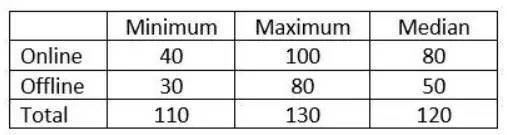
What was the total number of registrations in April?
In a coaching class, some students register online, and some others register offline. No student registers both online and offline; hence the total registration number is the sum of online and offline registrations. The following facts and table pertain to these registration numbers for the five months – January to May of 2023. The table shows the minimum, maximum, median registration numbers of these five months, separately for online, offline and total number of registrations. The following additional facts are known.
1. In every month, both online and offline registration numbers were multiples of 10.2. In January, the number of offline registrations was twice that of online registrations.
3. In April, the number of online registrations was twice that of offline registrations.
4. The number of online registrations in March was the same as the number of offline registrations in February.
5. The number of online registrations was the largest in May.
What was the number of online registrations in January?
In a coaching class, some students register online, and some others register offline. No student registers both online and offline; hence the total registration number is the sum of online and offline registrations. The following facts and table pertain to these registration numbers for the five months – January to May of 2023. The table shows the minimum, maximum, median registration numbers of these five months, separately for online, offline and total number of registrations. The following additional facts are known.
1. In every month, both online and offline registration numbers were multiples of 10.
2. In January, the number of offline registrations was twice that of online registrations.
3. In April, the number of online registrations was twice that of offline registrations.
4. The number of online registrations in March was the same as the number of offline registrations in February.
5. The number of online registrations was the largest in May.
Which of the following statements can be true?
I. The number of offline registrations was the smallest in May.
II. The total number of registrations was the smallest in February.
In a coaching class, some students register online, and some others register offline. No student registers both online and offline; hence the total registration number is the sum of online and offline registrations. The following facts and table pertain to these registration numbers for the five months – January to May of 2023. The table shows the minimum, maximum, median registration numbers of these five months, separately for online, offline and total number of registrations. The following additional facts are known.
1. In every month, both online and offline registration numbers were multiples of 10.2. In January, the number of offline registrations was twice that of online registrations.
3. In April, the number of online registrations was twice that of offline registrations.
4. The number of online registrations in March was the same as the number of offline registrations in February.
5. The number of online registrations was the largest in May.
What best can be concluded about the number of offline registrations in February?
In a coaching class, some students register online, and some others register offline. No student registers both online and offline; hence the total registration number is the sum of online and offline registrations. The following facts and table pertain to these registration numbers for the five months – January to May of 2023. The table shows the minimum, maximum, median registration numbers of these five months, separately for online, offline and total number of registrations. The following additional facts are known.
1. In every month, both online and offline registration numbers were multiples of 10.2. In January, the number of offline registrations was twice that of online registrations.
3. In April, the number of online registrations was twice that of offline registrations.
4. The number of online registrations in March was the same as the number of offline registrations in February.
5. The number of online registrations was the largest in May.
Which pair of months definitely had the same total number of registrations?
I. January and April II. February and May